Alder Springs
Deaf & Blind Community
in Morganton, NC
Deaf & Blind Community
in Morganton, NC
Read the article: https://www.thepaper.media/news/ncsd-foundation-rebranded-as-deaf-blind-pathways/article_e40127f3-1028-4885-831b-520a3e9b7889.html
Published by The Paper
By JACOB CHRISTOPHER [email protected]
In a move to make fund raising and public engagement more transparent, the NCSD (North Carolina School for the Deaf) Foundation rebranded as Deaf & Blind Pathways, Inc., officially adopting the new identity in early April.
The newly restructured organization, consisting of a board of directors with nine members and two committees, is now searching for an executive director, who will lead the nonprofit into the next chapter of development and impact.
The executive director will run day-to-day operations at Alder Springs Deaf & Blind Community, oversee the development and maintenance of the future activity center, work with public safety to update safety plans, and report to the board of directors.
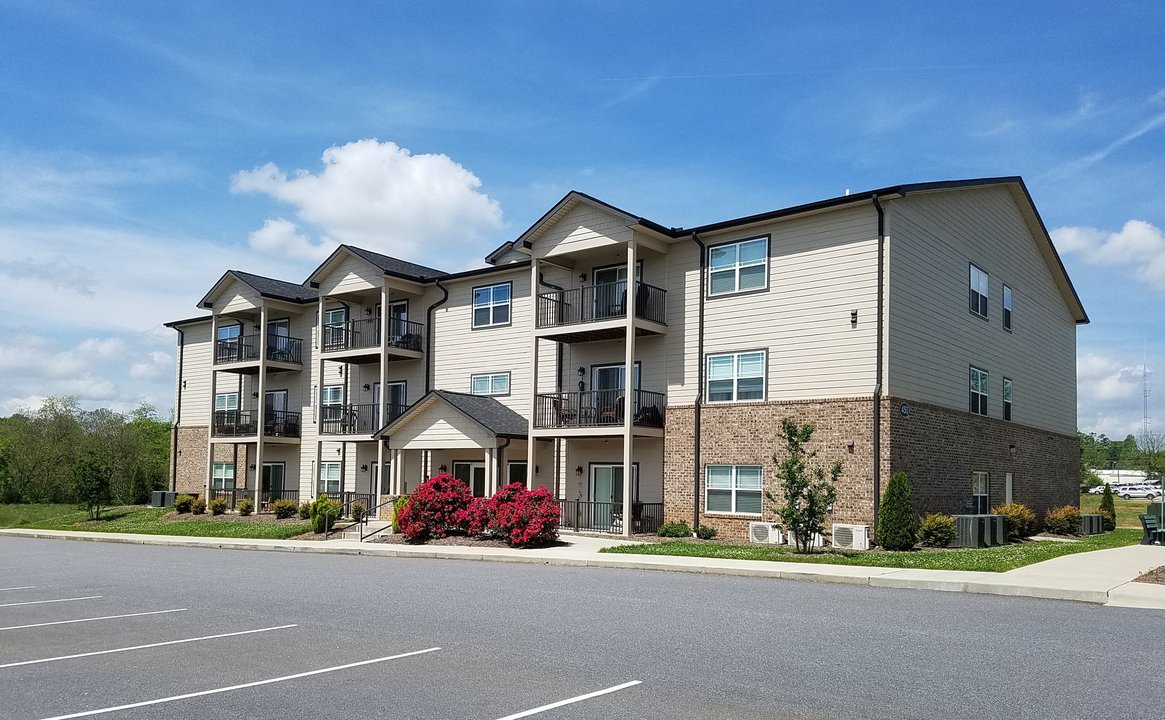
Alder Springs is an independent living apartment community geared toward the needs of the deaf, blind, deafblind, and hard-of-hearing.
“That person’s got to be doing a lot of things that we’ve had volunteers do since this started,” said Dotty Kirksey, the board president at Deaf & Blind Pathways. “The mission didn’t change. The goal didn’t change. The work didn’t change. Just the structure.”
Deaf & Blind Pathways, established as the NCSD Foundation in 1991, operates separately from NCSD, but looks to assist students and staff with funding that traditionally hasn’t been accessible through state and federal avenues.
The foundation owns Alder Springs and said that the rebrand is intended to make fundraising and public engagement more transparent.
“People were confused about the NCSD Foundation and Alder Springs,” Kirksey said, explaining that donors didn’t understand why they made their checks out to NCSD Foundation. “It was hard for people to decipher what was going on (and) who owns what.”
After the board conducted studies and strategic planning, it decided to alter the hierarchy, keeping one board, but creating two committees — one for education, “to carry on what the NCSD Foundation did,” and one for housing, managing Alder Springs.
The nine members include Board President Dotty Kirksey, Board Vice-President & Secretary Terri Ingle-Krause, Treasurer Ashley Ambrose, directors Andrea Totty, Lisa Kennedy, Matt Lowdermilk, Keith Whitaker, Victoria Mitchell, Jordan Moir, and director emeriti Sam Avery, Sandy Turner, Mickie White, and Chris Brittain.
Ingle-Krause also serves as the Education Committee chair and Totty serves as the Housing Committee chair.
The executive director role will work closely with both committees.
Ingle-Krause said, “Communication is a big part, also, of that position — to have somebody who is able to sign is a big, important part.”
Currently, Totty manages many of the Alder Springs functions, some of which will be shifted to the executive director and potential future employees.
All three women agreed that people in the deaf and blind community like to gather and socialize, but the space they currently have at Alder Springs is little more than a conference room with a few couches, chairs, a TV, and a stack of board games.
When many of the residents have to see each other signing to communicate, small spaces mean Christmas and Valentine’s Day gatherings often overflow out of the small beige room into the hallway.
The board is planning Phase 2, the addition of an activity center and another building with approximately 27 apartments to accompany the current 21-apartment building already in downtown Morganton.
“As far as a timeline, they haven’t decided anything, because we are still in the process of raising money,” Totty said. “We’re working on several grants. Hopefully we will hear from that grant money and that grant process soon.”
The foundation is already in talks with High Country Community Health to rent out the upper level of the activity center, paying rent and possibly providing health care services for students at NCSD, according to Totty.
“The goal was the apartments are going to be raising money, so they’re going to give it to the foundation, which in turn helps the kids,” Kirksey said. “We offer scholarships at the end of the year at graduation, summer camp, we bought shoes for the wrestling team, robotics — NCSD has a strong robotics program.”
Eventually, staff also got support in funding for field trips and professional development opportunities.
As the apartment community expands, the benefits come twofold: the school receives funding and the deaf, blind, deafblind, and hard-of-hearing receive a place to live and socialize. Much of the effort up to this point has been built on the backs of volunteers.
“It’s special,” Ingle-Krause said. “The people that do this have a heart for it, really and truthfully. So many people have poured years and years and years of their lives into seeing this come to fruition.”